Showing posts with label violence. Show all posts

Thursday, March 6, 2014

"Stop Teaching Your Girls..." Entertainment Addiction

In Bronies -2, I Had Few Conversations About This Quote

Stop teaching your girls about Teenage Mutant Ninja Turtles, Star Wars, and The Hunger Games in an effort to liberate them. "

Children don't recognize The Hunger Games
as social commentary, because of the
plethora of glorified battle sequences.
It is okay to read the Hunger Games. If your children tell you they want to see the Hunger Games, don't dismiss the idea out-of-hand. The franchise can be considered a critique of American militarism. The stories identify the line between physicality and violence, and deliberately cross that line. If violence is physicality with the intent of hurting another person, then clearly we in America have some forms of entertainment that are violent, and to the extent that we do, can we justify those entertainment forms? Did our constant justification of entertainment violence enable us to justify violent action in Iraq in March of 2003? Does our paranoia that leads to NSA spying, TSA craziness, and black lists arise from our constant playing out of destructive and violent narratives in popular culture? These are legitimate questions raised by The Hunger Games.

by Franc1NE, this image is represen
tative of the cosplay surrounding
The Hunger Games.
However, if viewers were truly interested in The Hunger Games as a social critique, the popularity of nonviolent protest against violence and militarism would have increased after the first film was released. Sadly, the only thing that has increased as a result of The Hunger Games, other than the bottom lines of multinational corporations, has been registration in archery classes to practice wielding violence (or at best provide a nonviolent outlet for violent urges with roots in the franchise). The Hunger Games is a franchise dedicated to entertainment violence weakly justified on the back of a critique of entertainment violence. If your child isn't able to grasp this irony, then they aren't ready to understand the Hunger Games as anything more than propaganda for the military industrial complex.

A Debate with a Welfare Libertarian (Mainstream Democrat from Gen X)

Gen X: I'm not going to censor my child's entertainment.

Me: It's not censorship. Censorship is when you remove something that you deem to be bad for society. Simply being conscious about the material that you procure for your child isn't censorship. It's citizenship.

Gen X: I don't decide for my child what he should read, watch, or listen to.

Me: If you don't, then multinational corporations will, and they've spent trillions of dollars over decades figuring out how to get your child to do exactly what they want him to do.

Gen X: Art is too important for me to foist my opinions on my child.

Me: When you procure The Hunger Games, or bondage child pornography for your child, you are indoctrinating them with your opinion of what is art by making an affirmative gesture to support it.

Gen X: Oh, calm down. It's just some fluffy entertainment. It's not bondage child pornography. It's The Hunger Games, a book written for children.

Me: But I'm arguing that justifying violence in our society is what leads to things like domestic abuse, rape, many assaults and murders, as well as inexcusable military actions and racist policing policies. The Hunger Games is an exercise in justifying violence, so it could be a root cause of these problems.

Gen X: So, you're saying I shouldn't let my child see The Hunger Games.

Me: No. I'm saying if your child isn't able to grasp the irony of violent entertainment as critique of violent entertainment, they aren't ready to understand the Hunger Games as anything more than propaganda for the military industrial complex.

Gen X: I'm not going to censor my children's entertainment.

Eye roll provided by Buster Keaton.

Addicted to Entertainment

Why is this so frustrating that I turn into Buster Keaton even thinking about it? Gen X never debates on the merits of the argument because they are too busy fighting the hypothetical. I am inclined to say that is because they know I'm right, but that would be unfair. They can't know that I'm right because they can't even get to the point where they are considering the idea that militaristic media contributes to social problems. The noteworthy thing is that their response is so remarkably similar to the response of addicts when they are confronted with facts that disrupt their addictions. It's kinda like the hysterical Portlandia sketch below.

Circular Arguments: Their arguments revolve around themselves and almost always start out where they began.

Unrecognized Contradictions: They argue that films are important pieces of art, but the very notion that films or sports they like may be making society worse leads them to spasms of "Calm down, it's just entertainment." Which is it? The same way that an addict can hold two contradictory reasons in their heads for why they take drugs (I am overworked and bored), Gen X has no problem arguing that The Hunger Games is an important social critique and a fluffy action film.

Denial: The whole point is to get social critics to stop criticizing the entertainment that Gen X enjoys. Sometimes, the braver welfare libertarian will debate the merits of media culture for a few sentences, but inevitably they revert back to the circular logic, contradictions, and tactics designed to shut the argument down. Several Gen Xers have admitted that they were not willing to come along with me on my critique, because they didn't want me to spoil the fun, which is hysterical because I find it more fun to critique the media than to passively experience it.
It's not just a river, it's De-Nile. Get it?
A friend introduced me to the idea that people are so resistant to these critiques because they are addicted to entertainment.  So, I read several versions of the mass entertainment addiction theory, which seems to have originated in Christian theology, but is now being adopted by social psychologists.

I haven't done enough reading yet, nor thought about it enough to conclude for certain that society is addicted to entertainment. However, with the availability of corporate commercialism at our fingertips 90% of the time on our computer/phones, and hundreds of cable channels beamed into our home at any given moment, it seems like the seeds of an opium-war-style societal addiction have been laid. If that is truly the case, it is more important than ever to be conscious about the entertainment that we provide for our children. And no, that is not censorship.

Thursday, February 20, 2014

Nerd Culture and Bronies- 2

What is a Brony?
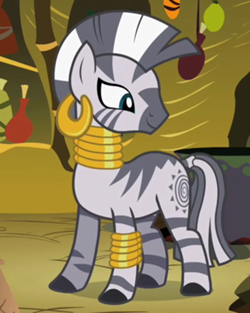
Ummm... How does one make
a pony in a racist caricature?
Ask the MLP zebra and she may
answer in fake gibberish Swahili.

Bronies are young men who are fans of My Little Pony: Friendship is Magic (MLP). Their female counterparts are called pegasisters. It is important to understand that there are several My Little Pony series, but most bronies and pegasisters are fans of Friendship is Magic only. It is also important to note that the show is not very good. The scenarios are unoriginal, the show is mildly racist (think African incantations in pseudo-Swahili), and the lessons learned are taught in exactly the wrong order for young children.

Studies show that children don't learn good behavior when T.V. characters do something wrong and then learn the error of their ways thereafter. In fact, in a study of children who watched Arthur the Aardvark and then played with one another, children were far more likely to engage in the modeled bad behavior from the beginning of the show than the corrected good behavior from the end.

MLP at Mardi Gras in New Orleans.
The photographer, Bart Evans, called
MLP "strangely compelling."
Please note that my own 3-year-old is a huge fan (which explains my begrudging knowledge of MLP Geography including Ponyville, Manehatten, and Canterlot). But my real reason for writing about bronies is the intense reactions they inspire. People find bronies ridiculous, creepy, and/or weird, and deride them as though they were stalkers. Whenever a person feels strongly about something so innocuous as which television show someone else enjoys watching, there's clearly something going on.

WAR ON PINK

Many people say they dislike MLP because it is too "pink" (btw- pink is my favorite color because it is imaginary). Pink is not the problem. Pink being used to push powerlessness and objectification on girls who are expected to have particular body-types... that's the problem. Pink used to shame girls into being princesses instead of queens... that's the problem. Pink as a cue for "girls should do this," and it's corollary, "Boys should not do it..." that's the problem.

Pony cosplay just looks
healthier and more fun.
Photo by Mooshu.
MLP is pink, but it avoids, and even fights many of the problems associated with pinkness. The MLP kingdom is run by women; princesses that really serve as queens. The heroes are all young female ponies, and they're not promoting any particular body type because they're HORSES, and horses don't exactly conform to modern American beauty standards.

Too often, well-meaning parents try to compensate for gender normalizing by introducing violence to girls, which is supposed to help them be more boyish. It doesn't work. Violence is emotionally handicapped and cowardly. When you teach your girls about violent problem-solving, you are teaching them to approach violence from a place of callous madness. Stop teaching your girls about Teenage Mutant Ninja Turtles, Star Wars, and The Hunger Games in an effort to liberate them. Good parents hope that their children will never assault another person, so why would we encourage them to pretend to do exactly that? You're not liberating girls, just making them into sociopaths like way too many men.

More importantly, boys are not innately violent. Please stop teaching your girls that we are. We all understand that a superhero is one who is capable of wielding violence. Superheroes are often affiliated with the military or paramilitary, but nonviolent resistance superheroes are relegated to obscurity with the classification "alternative." Alternative to programming girls and boys to reward violent behavior in potential friends, role models, and lovers. Let's try teaching children that being a boy means being healthy, happy, and powerful. I am boy. Watch me genuinely love.

In the worlds of comic books, this drawing from Badger is
standard fare. Photo from Mr. Digressius' blog.
But the ponies in MLP don't use violence to solve their problems, so they are not taken seriously by a society that is so militaristic that people are comfortable showing war movies to 3-year-olds. Stop fighting a war on pink. Start fighting against America's militarism (including superhero worship), which is the true culprit keeping women (and men) oppressed.

MLP TEACHES E.Q.

While young children cannot, bronies and pegasisters are in the perfect position to learn from MLP, and they do. There are dozens of iterations of the Brony Code created by fans. As one prepubescent voice says over his YouTube sketch about the Brony Code, "Laughter is a pride feeling, so you can laugh with a brony, but not at him." Bronies and pegasisters are consciously developing their own code of ethics based on the "elements of harmony." These elements are the most powerful weapon in MLP. Think about that. Instead of guns, webs, swords, lasers, bombs, or fists, bronies have harmony which is made of honesty, kindness, laughter, generosity, loyalty, and friendship.

Hasbro selling some crap.
Photo by Mooshu.
How often do teenagers and young men spend time thinking and expounding on the difference between generosity and sacrifice? Thinking about these things is exactly what leads to higher E.Q. Creating these codes and attempting to live according to them prepares children and young adults to be good people.

While it is true that Hasbro just wants to sell ponies, I am okay with that. Doug and Melissa just wants to sell toys that teach children how to build, add, and read. By acting out the scenarios in the television show, bronies are learning the lessons of MLP, and they are lessons that boys don't often get. MLP is a part of the nerd lexicon that does not have superheroes defined by a capacity for wielding violence. It teaches a forward-thinking ethic based on nonviolence.

WHY ARE PEOPLE SO PISSED OFF?
Calm down. They're just kids.
Photo of Brony Meetup by Smitty.

Bronies and Pegasisters are so damn scary, raising their E.Q.s, solving problems through non-violence, and enjoying a *GASP* television show created for girls. Calm down everypony. Hold your... well, horses.

There are two main reasons why people react so strongly to the brony phenomenon. The first is simple, and this is the reason that some poor brony in North Carolina had his car vandalized and was subject to homophobic slurs when his neighbors found out he liked MLPIf MLP is not masculine, but there are males who like MLP, then masculinity is not concomitant with having a penis. Too many men, terrified of losing their place in the hierarchy of violence, and therefore an object of violent subjectification, strike out with anger and fear at being struck themselves. It is the same reason that men inside the hierarchy of violence lash out against gay men and transgendered women.

The other reason is more complex. Many feminists have failed to recognize that some parts of the traditionally feminine schema are as valuable as, or more valuable than some things that women were and are unfairly denied. Children love prettiness because it's pretty, not because they're girls. Working in the realm prettiness makes artists great, chefs desirable, and politicians legend. But more than that, the ability to solve problems as a group, in harmony with people who may be rivals, with courtesy and gentleness is the foundation of democracy. In real life, kindness, laughter, and generosity are far more effective than the tool belts of superheroes even if the former are associated with girly plastic ponies.

Viva My Little Pony! Long live bronies and pegasisters!

Wednesday, July 11, 2012

Living Without Gender: A Conversation with a Trailblazer

Making Men Interview- 

Beau Laurence 7/5/2012 at the Gypsy Coffee House in Capitol Hill

Gypsy Coffee House

When I asked hir for an interview, Beau Laurence wanted to meet me beneath the fabric folds hanging from the ceiling at the Gypsy Coffee House. Beau is thin and freckled, with an Irish face and hair cropped in a pixie cut. Xi joked with a  straight face, and leaned forward in hir chair for most of our 90 minute interview, thinking and picking hir words with the intensity of a scholar.

Peeing in the Gender Woods

For Right Be Done, I was interested in hir thoughts about masculinity. Xi is making a conscious choice to adopt some of masculinity, keep some of femininity, and move to something new. If men are ever to be liberated, we must make the same kinds of choices as Beau. Because no conversation about masculinity can ignore our historical relationship to it, I started by asking about hir past. Surprisingly, Beau answered by talking about how we toilet.

Right Be Done (RBD): What is your earliest memory of what it means to be a man?

Beau Lawrence (BL): Probably the earliest difference that I remember is about how boys go to the bathroom. So, I have a brother who is two years older, and I grew up… I was born into, and until I was 10, we lived in a commune and I was the first female child. There were three boys. They were older than me. My brother and two other boys. So, I didn’t have other girls to hang out with when I was a little kid, I just had the boys.

Girls Peeing in Urinal by Paul Avril

So, we all played together. They climbed trees, so I did all of these activities and didn’t think anything of my body being different, or "I’m not supposed to do that," until it came to actually urinating and it was like, “Wait. I don’t have that. That doesn’t work for me.” I specifically remember asking my dad to teach me how to pee standing up so that I could be like the other boys. Because to me it wasn’t a boy/girl thing, it was a kid thing. Like, I couldn’t do what the other kids did. But I was the youngest one, so it’s like, you know in your kid brain, you don’t necessarily revert to gender as the reason you couldn’t do this. It’s, “I’m the youngest one and I haven’t learned yet and I want to be like the big kids and do this.”

RBD: What did your dad say?

BL: My dad was like, “Okay.” And I actually did learn. Then, I was at my grandmothers and I was like, “You wanna see?” And she was like, “you will never do that again.” That’s when I learned that it was definitely not a girl thing to do and that I was a girl. It was really her that sort of reinforced what a girl was NOT, more than, “This is what boys or men are like.”

In a society where “man” is neutral, it is normal for someone who was raised as a girl to learn only what man is not. Perhaps, the biggest problem with feminism has been that we have not discussed traditional masculinity from an objective point of view. However, Beau later told me about one person in hir life that did create from scratch a conscious definition of what it meant to be a man.  Television isn’t normally a place to break stereotypes, but xi cited one example of a man who strayed from convention.

The Radical Politics of Mork and Mindy 

BL: I hadn’t thought about T.V. shows until you asked this question. Lone Ranger.

RBD: Supermale. The Lone Ranger is definitely a super male.

BL: I remember being really offended. I was always really offended the way that he treated Tonto. I was really hyper-aware of… Wow this really is kind of awful, but straight white men were always pigs, and so whatever they did was definitely like, there are other ways to be because there are other males, and there are strong females, but these white males are awful.

Fair use for political comment,
from Mork and Mindy publicity.
BL (Cont): But, the first thing that popped into my head as an alternative male T.V. character was Mork from Mork and Mindy.

RBD: But wasn’t he an alien.

BL: He was an alien, but…

RBD: So, he wasn’t really a man.

BL: He was an alien impersonating what it was like to be a male getting coached by Mindy.

RBD: Strangers in a Strange Land sort of masculinity where he had this opportunity to point out how ridiculous masculinity was.

BL: And he could do really fun.., really childlike sorts of things and get corrected for doing gender wrong.

The writer’s of Mork and Mindy gave America a chance to question basic assumptions of masculinity, the same kind of assumptions that this blog is attempting to undermine. And here I thought I was being a radical when in fact Hollywood did it 40 years ago and in tight pants.

Condescending to be Helpful

Later, I asked about the best and the worst traits of masculinity.

RBD: So what is the worst trait that has traditionally been associated with the word masculinity?

BL: Certainly patriarchy. And condescension. But those really aren’t unique to masculinity.

RBD: What makes condescension in particular traditionally masculine?

BL: It’s so hard to separate the traditional concept of masculinity. It's so wrapped up in white northern European culture that it’s kind of like, “It’s all the same.” It may be more that whiteness, that religiousness, more than masculinity that [condescension] comes from. That manifest destiny, we know better, we’re chosen by god, sort of everything is our minion. Women and children and people of color are our property. That to me is the worst thing about traditional masculinity.

RBD: How about the best thing about traditional masculinity? The best trait?

BL: I struggle with this because the thing that I, throughout my life, have sort of really maybe wanted to emulate more than anything else is not necessarily a positive quality, but the self sacrificing is sort of…

RBD: I call it loyalty.

BL: But not just loyalty. Chivalry is a real awful thing that implies condescension and all of that negative, but the, “I’m going to take the burden on so that somebody else doesn’t have to,” is something that I’ve always really liked. I know that in a lot of ways it’s not healthy because it’s a lot of it ego, but I have always enjoyed being the kind of person that would give my seat to somebody else. Or carry something that was really heavy so that somebody didn’t have to. And it wasn’t that they’re not capable of doing it, but that I’m strong and capable, and I can help in this way. And I think that’s something I value about masculinity. That sort of willingness to, not help the old lady across the street, but sort of like, you need somebody to move heavy furniture, I can do that, and it doesn’t have to be somebody who has a penis that does it. But I think that there is that attitude of masculinity in that offer.

RBD: In a way it seems like two sides of the same coin. The thing that you dislike the worst (condescension) and the thing that you like the best about masculinity (helpfulness).

Petersburg- Caviar by Walter Smith
BL: And that’s what I really struggle with actually. And as I broaden my own awareness of who I can be, and it doesn’t have to be butch or femme. There’s been a lot of that sort of cafeteria masculinity, picking and choosing what you want to keep and what you want to reject, and it’s not just all bad. And the parts that I have traditionally thought of as good, have their origins in something that’s not necessarily positive.

The idea of cafeteria masculinity is close to the image of liberated men that I hold in my imagination. I originally conceived of writing an article about hors gendered folks for that very reason. We men who are seeking liberation are looking for role models ourselves. We are looking for people to pave the path to freedom. Those like Beau who have decided to take on the underpinnings of gender are acting as our Moses, leading us out of the constructs that have kept us in lives of solitude and violence. It is hard to imagine the threat under which they live as a result. The reaction to non-conforming gender is morbidly violent, and theirs is a unique courage born of a mix of desperation for acceptance and a rebellious character. Regardless of Beau’s reasons for trailblazing our liberation, we owe hir and those like hir a debt of gratitude.

Breaking Down Stereotypes 

At the end of our interview, we spent a long time just letting the conversation flow, and at one point I wondered if xi felt like society was becoming more free because of the breaking down of traditional gender norms in society at large.

BL: It is, but here’s the double-edged sword about all that. In the kinds of circles that I’ve traveled in, the radical political stuff. When there’s a meeting, people go around and introduce themselves and say what gender pronoun they prefer. It is sort of a thing for a lot of people to say, “It doesn’t matter.” And that’s really marginalizing and erasing for those of us who have to choose and are so aware of the choices that we make and that other people make. So when an obviously cis-gendered straight man says, “Oh, you can call me ‘she,’ I won’t be offended.”

Beau Laurence's profile pic from Facebook.
That’s really a place of privilege to be able to say that. "You do your gender so well that you won’t be offended if you are called 'she.'" For those of us who may not do gender very well, what other people perceive us as has a huge emotional impact, so that place of, “It doesn’t matter,” is like, “You’re not really taking seriously that it matters so much for some of us.”

RBD: That’s true, but being exposed to non-normative gender associations can break those stereotypes for cis-people.

BL: It absolutely can, and just like every other thing, this is sort of the natural way of progress. You have these very rigid boxes, and they start to get broken up, and then you have conventionally perceived or attitudinally conventional people who then start to co-opt the language. And that is something that is a natural progression, but it’s annoying.

(If you have a complicated relationship with masculinity, and would like to have your life broadcast on this blog, please contact me to set up your own Making Men Interview.)

Thursday, June 28, 2012

Dancer in the Park

A grand jete. Photo by Franny Schertzer
Yesterday, I took my son to the zoo. We found a park in between the giraffes and the camels and started doing our game I call "Jetes." If you have any dance training at all, you'll recognize a jete as a leap. From ballet it has been adopted by almost every other form of dance because, hey, dancers love to leap. As we play jetes, my son and I leap around going as high in the air as we can and shouting, "jete, jete" at the top of our lungs, regardless of the company we are keeping.

It is an unusual game, but it is a game that has inspired a great deal of other children (and some teenagers) to replicate us. Dance is the purest embodiment of joy in the universe. There is no barrier, no limb or appendage, no part of your consciousness between yourself and an expression of energy and exuberance when you are allowing yourself to give way to dance. And watching my son reflecting my amateur park dancing, I felt pride that my son was so uninhibited and expressive. In liberating myself from masculanization, I discovered a fulfilling emotional life, and I have given my son the chance to free himself.

Another family was nearby, and our lyrical steps soon led us into their midst. A five-year-old boy in a soccer shirt and pair of shiny sport shorts approached me to ask, "What are you doing?"

Kensington Park by Jospephson.
I answered, "We're doing jetes. It's a dance move."

From behind his gender drag, he asked me, "Can I see it again?"

So I did a couple of straight jetes and a ballet move that I enjoy a great deal called a grand allegro. Of course, I am terrible at these. At 6'4" and 185 pounds, my allegros are more floppy fish than soaring swan. Pretty soon, a passel of kids was chasing me around the little enclosure of grass, surrounded by the braying of animals at the zoo, the humphing of camels, a caw from a peahen, an occasional spurt of laughter from a distant hyena, and we were all leaping for the sky with our arms held suborbital over our heads.

Five children and myself leaped about on the grass as their dads watched, with expressions on their faces like I was turning leading their children out of Ireland with a pan-pipe of homosexual deviancy. However, it was not long before one of the dads pulled himself out of his bewilderment and did what men so often do when they are uncomfortable. He turned to violence.

He pulled aside the boy in gender drag and introduced him to a karate chop, then encouraged the boy to practice on him. The dancers in the park were soon ninjas on the attack. Even my own son, seeing that all of the other boys had been transitioned to acts of violence on one another, started to practice making Bruce Lee sounds while his joyful facial expression crumpled into the closest approximation of hate and intimidation that his chubby cheeks could muster.

The dad who had turned away from the deviant behavior of dance to the socially acceptable simulated violence was scowling himself, which is apparently the appropriate facial expression for men at play. I redirected my son and the girl back to peaceful and joyful dance, but my heart wasn't in it. The little boys knew their place. They had been successfully trained to know that "dance" involved pink tutus and girly slippers. Their momentary confusion that dance was something fun and powerful was just a lapse in judgment, promptly cured by Dad's reminder that they should be pretending to hurt one another.

I was reminded of one of the most instructive gender-training moments of my childhood. My own first ballet class ended in crying as I realized that I was the only boy. My fear of what it meant to be feminized drove me to wander the hallways with tears streaming down my face. If I was doing something that was for girls, did that mean that my friends, who refused to play with girls, wouldn't play with me anymore? What about all the finery that I saw on the dance floor? The tutus and leotards that I didn't own only served to show me how foreign ballet was from the life for which I was being trained. 10 years later, I started taking ballet again, this time in the early stages of a teenage rebellion that would form my belief in the necessity of men's liberation.
Virtual image by Jie Loon.

Still, for a brief moment, on the plain between the giraffes and the camels at the Denver Zoo, I was able to imagine a world where small boys were not introduced to violence as a matter of course. In this world, it is acceptable and encouraged for boys to spend their afternoons learning about jetes and grand allegros. In the world to come, perhaps even my future grandson's generation, the default game of choice with a dad will not be pretend to beat each other up, but express yourself through clumsy, but powerful, leaps.

Saturday, July 2, 2011

Video Game Violence, Censorship, and Sexism

Arguing against banning video game violence but arguing for a ban on animated child pornography is sexism.

The reasons that we censor pornography have always been motivated at least partially by sexism. There is no other way to explain it. How is it that consensual sex is so horrific that some consider breastfeeding in public as obscene, but partaking in a simulation of the quartering of a woman dressed in highly sexualized clothing is not? How could it possibly be that the act of creating life is obscene, while the act of ending life is not?

The obvious answer is that our narratives have convinced us that women hold the power in consensual sex, but clearly it is men who hold the power over violence.

J. Scalia points out in his recent opinion on age-limits for the purchase of violent video games that literature is full of violence from Homer on down to today's copy of the New York Times. Isn't it also full of sex? Wasn't Lott fucked by his daughters (Genesis 19:30-36), and didn't the men of Greece rape the Trojan Women at the end of the Illiad? And yet, interactive depictions of these acts are sold in XXX shops to people 18 and over.

J. Scalia also argues that pointing out how much video game violence is racist and antisemetic (as J. Alito does) makes a case that it is art and therefore free speech. But an inordinate amount of child pornography is sexist. Does that mean that child pornography is art?

In an earlier case that banned animated child pornography, despite the fact that they cited no studies indicating that animated child pornography harms children, they were willing to believe that it would feed pedophile's urges and make them more likely to victimize children. However, they are unwilling to look at the ample studies that prove categorically that violent video games increase violent behavior, decrease helpful behavior, and have led to countless assaults.

I'm not saying that I think we should regulate video games, but if we do not, we must not regulate animated child pornography either. But of course that will never happen because sex is so insurmountably abhorrent that even consensual loving sex is often an exception to the first amendment. On the other hand, violence is necessary to keeping women in their place.

Violence is necessary because we need to train little boys, and I mean tiny little boys who have no reason to hate anything, to grow up into killing machines. We need to convince men that killing one another is a feat that not only is acceptable, but is rewarded on Memorial Day, Veterans Day, the Fourth of July and by saying, "Thank you for your service" when we encounter a professional killer on the street. I do not mean to trivialize the service of our men and women in uniform. They are professional killers, but if we are to live in an imperfect world we have to be able to protect our nation. However, we must keep their service in context.

These violent video games are aimed at boys because we need to train them to believe that it is exciting to kill and be killed. In video games, it is easy to say I "shot him" and he is "dead," and even I am "dead" or I am out of "lives." It is all so trivial, fun, rewarding, and exciting that the military itself uses these video games for training and recruiting purposes, and sponsors the creation of these video games. We are training boys to live lives of violence. Violence requires victims. Many of these boys are not able to find legitimate victims so they turn to one another, or their wives, or their children, or people in the street, or themselves.

And the reward is even better than it seems at first. The reward for all this violence is the continuation of the gender hierarchy that puts men on top, keeps women on their backs (and I do mean it that way), and aligns the world all right (and I do mean it that way). If the little girls flinch when the little boys cheer, it just proves to us all that little girls and the women they grow into are not cut out to do what needs to be done to run our country, our world, or our society. Girls need to be protected, so they should play Dora the Explorer, or at worst Super Mario Bros., but leave the violence to the little boys who are "just naturally drawn" to beating prostitutes to death before decapitating another victim.

The worst problem with this holding is that it completely misidentifies and aids the true threat to our freedom of speech. We are no longer living in a world where governments (Egypt, China, and Iran) are able to control what we say. We now live in a world where the most active censors are corporations, the same corporations that are making these video games. Sometimes corporate censorship is the kind that we know traditionally, as is the case with Apple and Amazon.com when they ban objects from their platforms because they claim they are obscene (who gets to say what's obscene and how come it's always gay smut?).

More often, corporate censorship is the marketing of certain (usually sexist) products, while making other products mostly unavailable. They say that they market what the public wants, but if that were the case nobody would ever pay for marketing (I'll let you puzzle that one out). In fact, they spend millions attempting to get us to want certain products. Corporations use advanced psychological techniques that are as effective as brain washing, and they target children whose brains do not fully mature until as late as 25-years-old.

Which is what these corporations do with violent video games in California. They rate the game M for Mature, and recommend it for users over 16, but then market to 12-year-olds who buy the games by walking to their local Game Stop and then hiding it until late at night during a sleepover (where your child visits and plays it even though he doesn't own those kind of video games because he is a good kid). The question in this case was not whether the video game manufacturers should be able to sell to kids, or even market their mature products to kids who everyone admits are too young for the game. The question in this case is should those kids have to ask their parents for permission to buy those video games as they have to do already for pornography. The question is whether our puritanical society thinks consensual sex is worse than murder. The answer is clear. They are both terrible evils... [Excuse this interruption, I'm being handed a message from our sponsors. "Violence is awesome!!! Rip off some fucking heads!!! Rip them off!!! Yeah!!! Rip that hot bitch in half!!! Yeah!!! This rocks!!!"]

Tuesday, August 18, 2009

Manifesto To Eliminate Masculinization (Part One)

Men are caged by fear, suffering and unhappiness. Suicide rates, self-destructive behavior, and neurotic violent tendencies belie this fact. This group must consciously support the quiet and radical revolution already under way. We must free men!
The women’s liberation movement cannot succeed until men too are freed from traditional gender’s tyrannical grip. Only a concerted effort to liberate men will provide significant race and national origin equality. Anti-gay bigotry, above all other kinds of prejudice, is rooted in the maniacal maintenance of traditional masculinity (hereafter “masculinity”). Therefore, the next logical step in the continually progressing civil rights movement must be the liberation of males from masculinity.
The women’s equality movement has begun to liberate men, kicking and screaming, but only with a more concentrated effort on the destruction and reconstruction of masculinity can we advance the freedom of men. Likewise, without a full frontal assault on masculinity, women’s is ended, and will not be able to progress, because women and men are intimately connected. Many women share their most intimate relationships with men, and so long as a man is suffering, so too will any person of empathy who loves that man. Suffering is the root of all fear, and fear is responsible for paralysis and retreat. When suffering does not bring about fear, it brings anger. Men should be angry that they are suffering at the whim of improbable oppression. However, all too often, that anger irrationally becomes violence against those who most desire to end their suffering. Too often, that same suffering is turned into violence that is used to make sure that other men suffer. This society can end the suffering of men. Society must direct its anger at masculinity itself and, finally, after millennia of the most insidious and malicious oppression, we must liberate ourselves.
In the next couple of weeks, this blog will publish a manifesto of freedom for men and all persons who have ever had any relationship with men. Acknowledging that if men are freed, it is due to feminist and critical race thinkers, this writing is not a work of academics, but a work of punditry and passion at best. In the next entry, the nature of the Masculization process will be shown to be a cycle of violence filled with bribes and punishments. After that, different specific functions of masculinity will be highlighted for elimination, from capitalism (an inherently masculine and violent method of societal interaction) to the male eviction from the home.