Showing posts with label Masculinization. Show all posts

Thursday, May 8, 2014

Nonviolent Resistance= Bicycle Commuting

Bicyclists Everywhere!!!


For more than 20 years, I have been predominantly a bicycle commuter. A lot has changed. There are more bicycles than ever, but I fear that it is just a fad. So, using my 20 years of experience as a bicycle commuter, my decades of experience as a nonviolent resistor, and my training as a lawyer, I have developed a Real Bicycle Safety Code meant to encourage cycling while resisting the extremely disastrous notion that bicycles should be treated the same as automobiles.

Divide Both to Conquer Each


The current laws create antagonism by forcing bicyclists and cars to share the same space on the road. While almost all cyclists are also automobilists, the reverse is not true, and most legislatures do not have the slightest idea how it feels to commute on a bicycle in a snowstorm (i.e. wonderfully liberating). Studies show that more people want to ride, but they feel unwelcome and unsafe. The Real Bicycle Safety Code is meant to deal with that problem by encouraging casual cyclists to join in the fun.

One way to encourage people to ride is to smile when you see a baby on a bicycle. Smile when you see another cyclist. In all my years of riding my bike to get places, riders have never been so surly and 'manly'. Please remember, cycling is still as much fun as when you climbed up that steep hill so that you could race down the other side to the candy store. Whether you're a cruiser, fixie rider, gear head, or a utilitarian, follow this code to make riding better for everyone and remember to have fun.

The Real Bicycle Safety Code


While I believe these rules are safer than current laws treating bicycles like cars, no  set of rules can guarantee your safety. Please ride safely and carefully. Wear a helmet and don't listen to music while you ride.

 1. Always Stop and Wait at Red Lights (Unless the Pedestrian Sign Says You Can Go)
The Dutch always stop at lights, but they
have better structures for keeping cyclists
safe.
We have to keep cars off side streets except as they traverse to the main streets. In order to do that, we
should encourage bicycles to streets with more stop signs and fewer lights, which is why we should pressure other cyclists into stopping at red lights. We could each try to decide which streets should be "auto-friendly," but we would never all agree. It is better to follow the existing structure and let "bicycle-friendly" streets evolve naturally. When all the streets in an area have lights (in major downtown areas), following pedestrian lights will sometimes space out bicycles from cars, thereby making everyone more comfortable on the road.

2. Treat Stop Signs As Yield Signs

Bicycles, like cars, are drawn to the routes where they can expend the least energy by stopping the least often. If we can draw bicycles to streets with stop signs, they will stay out of
larger streets more appropriately left to cars. This will make novice riders feel more comfortable riding with larger groups of riders on stretches lined with stop signs. Yielding at stop signs means slowing down, keeping your hands or feet on the brakes, looking both ways, and stopping for any automobile that is crossing against your bike. Similarly, four way stops should be treated as four way yields.

3. Wait at the Front of Traffic for Red Lights

You are more visible, safer, don't breath in fumes that chase off novice cyclists, and can have a friendly chat with the other cyclists. Try to stay out of the way of pedestrians. After all, you're on a bike. It's small and maneuverable, so you can easily move out of the way when needed. That's why bikes are just better.

4. Four Miles Per Hour on Sidewalks

An original 1913 bike messenger in New Orleans.
Try to ride sidewalks at the same speed as a jogger would negotiate it. Riding on sidewalks is often necessary for basic safety, and making people get off and walk is a deterrent because it is unwieldy, and makes bikes less maneuverable. In order to turn left out of a right-hand bike lane, using a sidewalk and crosswalk to get into the cross street is the only safe option. The last half block on a major street like Los Feliz in L.A., Colfax in Denver, Rhode Island Avenue in D.C., or Atlantic Avenue in Brooklyn should be negotiated on the sidewalk. However, the speed limit on any sidewalk should be around 4 miles per hour to keep everyone safe and comfortable.

5. Accept the Ticket and Be Nice

This is the great day when a bicycle
cop pulled over a car. 1942.
The ticket you may receive for following this Real Safety Code is worth it. This code keeps you safe and efficient, encourages others to choose this safe and convenient form of transport, and keeps the future of our planet healthier. However, as with all civil disobedience, it is not legal. Every time you get a ticket, you have an opportunity to talk about the Real Bicycle Safety Code. Tell the officer about the code, tell the judge about the code, ask for a jury if you can, and tell all your friends.

Self Defense


Stree art in Panang, China captured by Azreey.
If you are ticketed for following the Code, I encourage you to explain your reasoning to the judge, and introduce this John's Hopkin's info page showing the health risks of inactivity, and these  U.N. Reports on the certainty of anthropogenic climate change, and the likely effects of climate change. You should claim self-defense against climate change and disease (including heart attack and cancer) as the reasons for following this code, and self-defense against an accident with a car as your reason for the specific infraction (be it breaking a stop sign, or riding on a sidewalk). Self defense forced you to ride in a way that you believe is sustainable, and self defense forced you to ride in a way that is less likely to be hit by a car. You will likely lose your case, but pay your fine knowing that you have made the world a better place, and the fine is a lot cheaper than the costs of commuting in a car. Losing cases like this is what civil disobedience is all about.

Wednesday, May 4, 2011

The Future of Gender (as I see it)


Based on the last hundred or so postings, I have spotted two opposing trends. There is clearly some progress. I am always heartened at how substantial the movement is that I merely attempt to identify in this blog. But there is also some clear backfire. Ostriches don't really hide their heads in the sand when they are frightened, but they do run, and the radical regresivists are high tailing it right now.

There is so much progress on the way towards equal and plastic gender that it is difficult to document it all, but three examples provide an outline.
  • Tolerance of Non-Traditional Genders: Main stream society now embraces, or merely rolls its eyes, at the idea of btqq and more than 40 other nontraditional genders, including hors gender categories like 3rd gender and intergendered. While I do not want to overstate how accepting society actually is, it is practically a revelation that some of these "good-ole-boys" don't form mobs and riot when we consider how threatening this must be.
    On an old episode of Ally McBeal, a transgendered kid appeared with nary a comment. Instead, the entire office just referred to her as "him" except when she was not around, and then of course, she succumbed to the popular notion that all non-traditionally gendered people are inviting violence when she was beaten to death at the end of the episode. While the mainstream loves to believe that they are accepting, their legitimate concerns for the safety of the non-traditionally gendered is sometimes genuine, and sometimes (as may have been the case on Ally McBeal) it is a cautionary tale. When those concerns fall into the latter camp, they resonate of the wisdom of a father who tells his daughter after she is raped that she shouldn't have been wearing that "trampy" outfit.
    Though this movement has a long way to climb, just the very fact that there is a rung on the ladder where gender is not tied to biological sex is titillating. Can you feel it? I'm practically shaking with titillation.
  • Ambivalence Towards Gays and Lesbians: As a society, we now appear to love our gay stylists and lesbian comedians as much as we love to hate them. I don't think it's possible to overestimate the impact of "Queer Eye for the Straight Guy" on my life. Though the show perpetuated gay stereotypes, it also began to value typically feminine concepts in straight men. The notion that it was hip and fun for straight men to care about their dress was a revelation brought to us by our love of gay men, so long as they stay in their proper spheres. The main stream acceptance of a t.v. show featuring five gay men as experts (a practical Stonewall Riot of fashion advice) allowed America to pat itself on the back and say, "Look how far we've come."
    Still, we have grown to love certain kinds of gays, and that is surely progress. Hell, there's even the Log Cabin Republicans (a.k.a. the Banana Republicans) and when both parties are at least talking to gays and lesbians, there can be no doubt that progress is being made.
  • The Feminist Successes: And of course, in many ways feminism is becoming a victim of it's own incredible successes. Hillary Clinton not only made a viable run for president but sits as another in a line of women serving as Secretary of State. Women are in more and more professional positions, including occupying almost 60% of our nation's colleges and universities. And despite the cries of the Reganites, children are still being raised without devolution into utter chaos. Yes, without a doubt, the feminist movement of the sixties and seventies has been an overwhelming success.
But the direct result of the progress of these movements was a series of sometimes unconscious and sometimes blatant backfires of regressivist thinking. Though it makes society seem incoherent, these trends are just as mainstream as the three trends above and many people embody each and every contradiction without any sign that their heads are about to lose cabin pressure. Our society loves contradiction like a geometry teacher loves plaid and stripes.

  • New Manliness: I don't think that I am imagining it when I notice that many people expect men to revert back to 50's stereotypes. Men are expected to be warlike sports-adoring knights even as they are expected to be good dads (not fathers) and caring husbands. We are fine with women succeeding, just so long as it doesn't mean that men have to make any changes whatsoever. Cultural icons from all sides of the spectrum, from Sarah Palin and Judith Schafley, to Barack Obama and Sarah Jessica Parker, all continue to idealize men who practice traditional masculinity like it is a hobby. This movement is disturbing as much for its unrealistic expectations as its very real repercussions.
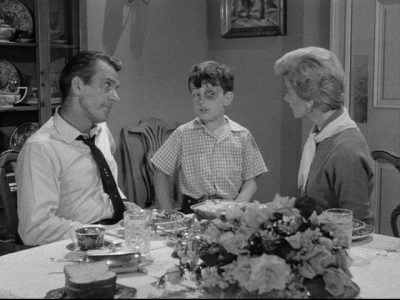
    Men cannot look to Ward Cleaver as an example of what it takes to be a good dad because there would be no Ward without June who now has a satisfying and meaningful out-of-the-home job. So men came back to an empty house. People expect men to be comforted by that. "No kids at home?" we're supposed to say. "Great! I can pop in that first person shooter I've been dying to try while I drink beer and watch porn on my 64" 3-D television."
    But it is sadder than that really. We just didn't think at all about what we expected men to be like in a society where women had been liberated because there was an inherently sexist tone at the base of the 1960's and 70's women's movement. Only a very few academics stopped to ask what men were missing out on. Men never asked themselves, "what are we missing when we leave girlie things to the women?" And the reason, of course, is that girlie things are inherently valueless except in so far as they can attain some socially recognized success. And by socially recognized, we mean recognized by men. So you see, in the end, there is no such thing as reverse sexism, it's just the same sexism, differently perceived. Kind of like the same M&M, but a different color shell.
  • Girl Power: We have certainly recognized that Girls (big G) have power. Isn't that what the Spice Girls were all about? Lipstick, makeup, and toenail polish are all now being reclaimed as powerful objects of ornamentation that can promote a woman's career just like a good power tie can make or break a president. Right?
    If they were really acknowledged as powerful, then wouldn't the people in power be wearing them? Why isn't the president, or even the Secretary of State borrowing from this supposed "Girl Power?" How many women ceo's are wearing power FM Pumps while they walk into a boardroom?
    The answer to all these questions lies in the name of the movement itself. It is "Girl Power," not "Woman Power." We make it infantile because our image of a powerful woman is not an older woman at the helm of a fleet of merchant ships. She is supposed to be a child taking her power in a way that men can recognize (sexually), rather than a threat to the established hierarchy. Unforunately, "Girl Power" is not in contradiction to "Boy Power" as it at first sounds, but actually opposes "Woman Power."
    Another, more insidious version of "Girl Power" is the new long line of "Power Princesses." On top of targeting VERY young girls with an image that benefits the bottom line for traditional mega corporations, it exemplifies a vision of the powerful female as young and it shows their "power" as trivial and meaningless without men.
    I am baffled by the fact that nobody has thought to make it a movement about queens instead of princesses, and I am not talking about the elbow candy queens of the last century of French autocratic rule. I am talking about Queen Elizabeth I, perhaps the most powerful and successful monarch in European history. She managed to take England from an inconsequential island nation looking up at the dutch with eyes the size of saucers, to being the famed empire on which the sun never set. But if English monarchs aren't your taste, we've got Cleopatra (the real one, not the sexy one from the pornographic imagination of the "Greatest Generation"), Hatshepsut (yes, that Pharaoh does have breasts), and Isabella I (the discovery of the American trade route? Just something she thought up during her knitting circle).
    But of course, we know why we'd prefer to focus on Princesses. Because women with actual power scare us, even if they are VERY young. Worse than that, the reaction from the folks over at Disney to the criticisms of traditional princesses, has been to make the princes who were rescuing them powerless themselves. Make the man look powerless even while you make the woman actually powerless. The impact of this on children, boys in particular, but also girls who will eventually realize that the new Princess of Whales is just elbow candy to anti-democratic figureheads, is going to be interesting to watch as the current generation of kiddo's comes of age.
  • The New Gender Code: All of this has accompanied a feeling among Americans that putting children into their particular gender roles is completely okay. It is practically impossible nowadays to buy boys clothing with any pink on it at all. Even Teddy Roosevelt, the great Rough Rider himself and defender of early 20th Century masculinity, photographed his infant sons in dresses (that infant in Teddy's eldest daughters lap, is his son Quentin). This desperate scramble to make sure that every child, no matter how young, is easily identifiable as boy or girl is a brand new movement. Considering that we are supposed to be in an era when gender doesn't matter, this seems at first like a flat out contradiction. However, it is the belief that gender is an inconsequential game which we all play, that enables this hyper-genderization of our young children. After all, children are supposed to play, and one of the things that children need to play at is gender. That is how they learn what it means to be a boy, girl, man, woman, and other (see the section on non-traditional genders above).
    But children are not playing at gender. Their parents are using their children as genderization test subjects. Infants don't buy their own camo fatigues and princess dresses. We do it for them, and when we do, we are sharing with them our priorities. We are explaining to them better than if we gave them a lecture on the immovability of gender traits that women are elbow candy, and men are warlike and aloof.
    There are others still who feel free to hyper-gender children because they don't think that gender is influenced by environment. This theory is based on books like "As Nature Made Him." Not even taking into account the horrible scientific methodology on which these books rely, none of us actually believe that gender is immovable, otherwise, like Teddy Roosevelt, we wouldn't point at parents who dress their infant boys in dresses and say, "You're messing that kid up." It wouldn't matter how we dressed our infant boys because they would grow up to be manly men (or less manly men) regardless of what we taught them to be. All girls would like pink and all boys would hate being kissed, regardless of how recently pink was actually a color associated with masculinity and how often full grown men in other cultures kiss each other as a sign of comradery.
So here's my prediction. I predict that the generation we are now raising will rebel. We are at a stage right now that is more gendered than at any time since the 1950's and in some ways advertising has made us more gendered than at any time in America's history. But the genie is out of the bottle. As the young people in the preschools, and elementary schools today grow into adulthood and go to college, too many of them will read Gloria Steinem, Catherine MacKinnon, and Susan Faludi to keep this whole gender liberation thing a secret. That knowledge will spread and we will have a gender rebellion on our hands that is as significant as the hippies and bra burners (note; very few bras were actually burnt).

That is the extent of my rather whimpy prediction. This generation will rebel against its parents (now that's controversial), and it will be so incredibly creative and exciting that none of us are able to say for sure exactly how it will be done. Most of us will be terrified of it (because if we are not, it won't be rebellion), and all of us will think to ourselves in our grumpy ways, "kids today." Even those of us who want a rebellion against today's hyper-genderization will utter complaints like, "These kids don't know what a rebellion looks like. I remember back in the day..." The cycle will continue. The only thing you have to ask yourself is, will you be on the right side of history?

Tuesday, September 15, 2009

Manifesto Part III: Fraternal Groups

Men in groups are remarkably trustworthy and loyal. They often act against their self-interests to aid a friend. The power of the bonds between men is a great and compelling attribute. However, these relationships often become abusive. Sometimes, fraternal groups bond through masculinization that becomes more and more extreme as members of the group feel more and more disempowered by their lives. The bonds they form are filled with boasts and bravado. Some men boast about their athletic abilities, their cars, their grade, their salaries or their property. Eventually, however, the boasts ring hollow because these limited measurements of success do not in fact prove maleness, and the groups are faced with the choice of becoming vulnerable or continuing their boasts into impossibility, desperation, and panic. Those fraternal groups that do not allow themselves to become vulnerable and admit their weaknesses express their panic with one another in ever more cowardly and abusive ways that often lead to violence, crime or abusive name calling (the word “pussy” is used a lot). Men need to relate with one another, and they should, but vulnerability is not masculine, so how can they do so?
Because conversations about feelings and priorities are often considered feminine, men often relate indirectly through some form of entertainment. These media are too often ways of reinforcing masculinity. Men talk about sports, action films, (often violent) video games, women’s bodies, and hunting among other things. In talking about these things men are reified in their masculinity at the same time that they teach masculinity to others listening. As men become more secure in their ability to present masculinity, and their bonds with one another become stronger, they will explore more feminine forms of entertainment, or even talk about emotions, feelings, and family life, but even then they regularly revert to masculine media as ice breakers. In this way our bonds to one another become bonds to the tyrannical fear mongering masculinity of our childhood.
Even with the safety mechanism of masculine entertainment casting its shadow over men’s friendships, occasionally they grow to love other men in meaningful ways. However, they are afraid to express their love for fear of being feminized by being associated with homosexuals. They cannot even tell another man that they love him without adding the word “man” to the end of the phrase in order to reassert the masculine nature of their love. Even more frightening is the possibility of touching these men in any kind of caring or loving manner. Because team sports replicate the masculinizing influence of physical violence, they are allowed to embrace each other in a scrum, hug one another in a game of tackle football, and grope each other in a half nelson. However, without the protection of simulated violence, even a hug can be uncomfortable and kissing has been made repulsive. Of course, repulsion is a kind of fear, in this case of physical contact that, if enjoyed, will be a force for feminization that will leave them under threat of violence.
Friendship brings with it great satisfaction and happiness. These relationships also bring stability, as most men know that there a some other men on whom we can trust with our lives. But these relationships are hijacked when they are allowed to become tied to masculinization.

Tuesday, August 18, 2009

Manifesto To Eliminate Masculinization (Part One)

Men are caged by fear, suffering and unhappiness. Suicide rates, self-destructive behavior, and neurotic violent tendencies belie this fact. This group must consciously support the quiet and radical revolution already under way. We must free men!
The women’s liberation movement cannot succeed until men too are freed from traditional gender’s tyrannical grip. Only a concerted effort to liberate men will provide significant race and national origin equality. Anti-gay bigotry, above all other kinds of prejudice, is rooted in the maniacal maintenance of traditional masculinity (hereafter “masculinity”). Therefore, the next logical step in the continually progressing civil rights movement must be the liberation of males from masculinity.
The women’s equality movement has begun to liberate men, kicking and screaming, but only with a more concentrated effort on the destruction and reconstruction of masculinity can we advance the freedom of men. Likewise, without a full frontal assault on masculinity, women’s is ended, and will not be able to progress, because women and men are intimately connected. Many women share their most intimate relationships with men, and so long as a man is suffering, so too will any person of empathy who loves that man. Suffering is the root of all fear, and fear is responsible for paralysis and retreat. When suffering does not bring about fear, it brings anger. Men should be angry that they are suffering at the whim of improbable oppression. However, all too often, that anger irrationally becomes violence against those who most desire to end their suffering. Too often, that same suffering is turned into violence that is used to make sure that other men suffer. This society can end the suffering of men. Society must direct its anger at masculinity itself and, finally, after millennia of the most insidious and malicious oppression, we must liberate ourselves.
In the next couple of weeks, this blog will publish a manifesto of freedom for men and all persons who have ever had any relationship with men. Acknowledging that if men are freed, it is due to feminist and critical race thinkers, this writing is not a work of academics, but a work of punditry and passion at best. In the next entry, the nature of the Masculization process will be shown to be a cycle of violence filled with bribes and punishments. After that, different specific functions of masculinity will be highlighted for elimination, from capitalism (an inherently masculine and violent method of societal interaction) to the male eviction from the home.