Thursday, September 22, 2011

Primal, Masculine, Child Rearing

Dads throughout the nation feel a threat to their masculinity. According to a recent study, testosterone rates lower as men spend more time with kids.


The finding itself was not surprising. It has long been known that women have hormonal reactions to becoming caregivers. The only reason to think that men did not have similar reactions would be if our species were reptilian, and males did not participate in child rearing. Yet, reactions in The New York Times, the Los Angeles Times, and Fox News were histrionic fear that dads were losing their manliness. Are men still real men after they’ve had children and their testosterones levels have dropped by (*gasp*) more than 30%?

Being a man is not about having a high testosterone level. The only reason that species have men and women is to have children. It’s about sexual reproduction. It is not threatening your masculinity to have children because it is the ENTIRE POINT OF maleness in the first place.


The American vision of masculinity leaves no room for children. As a very funny Washington Post blog joked, “You don’t want to hold a baby unless you’re holding it like a football.” Yet somehow, our culture of masculinizers has got it in their heads that being a father is less manly than being a football player.


The reason that football is considered masculine, and fathering is not, is simple. For hundreds of years, western society has convinced men to be cannon fodder. This is especially true in America. Young boys don’t play with dolls, a tool that might teach them how to be better fathers. They play with GI Joes, a tool that teaches them how to be guerrilla warriors. While girls are learning how to prepare food, something that comes in handy for any person who likes to eat, boys are outside learning how to throw a basketball into a basketball hoop, a task that comes in handy for almost nobody.


But we grow up, and when we do, we are supposed to realize that GI Joes and basketball were just play things and that family and work are our lives. I feel true sorrow for any man who doesn’t.


Men don’t realize what being a man actually means for numerous reasons, but the biggest one is fear. Some of them are cowards, but most simply don’t understand what they are afraid of, so let me explain it for them. The entire threat behind traditional masculinity, the threat that is literally beaten into us as children by other boys who are afraid that they are not masculine enough, is the threat of feminization.


From the start, children are told that boys wear blue and girls wear pink, and they believe it because they can’t tell (through clothing) what else could possibly be the difference between a boy and a girl at an age when physiological differences are practically inexistent. Under the coaching of terrified and cowardly men, boys make other assumptions about what it means to be a boy, and when a boy does not conform, he is punished. Boys are mocked, ostracized and sometimes physically beaten. A boy who goes to a ballet class may be teased because “only girls do ballet.” A boy who wears nail polish may not be allowed to play with his friends because, “this is a boys-only club.” A boy who kisses another boy in his teenage years may be beaten to death in the Wyoming plains.


Even if we are not the subject of these punishments, we learn from them. We see what happens to boys who wear nail polish. We see what happens to Matthew Shepard. We equate that in our minds with being a girl because that is exactly what our punishers intend. What other message could we get out of the statement, “this is a boys-only club,” but that we will be ostracized for not being “boy” enough, and in a society that recognizes only the two classic genders, who else could we be if not a boy, but a girl? Girls, therefore, are teased, ostracized, and beaten. For some strange reason, boys don't like being beaten.


But the threats are hallow. The people who defend traditional masculinity are cowards. Do not be afraid. You are not less of a man for caring for your children. In fact, I would go so far as to say that you are not an actualized man until you are caring for children, so go out right now and adopt some. If you don’t want to adopt, offer to baby sit. If you don’t know anyone who needs a baby sitter, then email me and I will recommend a terrific mentoring organization in your city or town. We have many jobs as adults in a democratic society, but as a man we only have one; raise the next generation.

Monday, August 8, 2011

Living the Thug Life as a White Stay-At-Home Dad

Americans have an ignominious relationship with thugs. In the 2008 election, Tom Tancredo’s campaign was focused on the threat posed by MS-13 (he even started rumors that the gang was joining the military to shoot our boys in the back in Iraq in a desperate attempt to make the threat relevant). Going back to the 1970’s, Nixon’s war on drugs was really a war on thugs in the form of people of color who used the wrong kind of drugs. As evidence of that, the drug war has never targeted “civilized” drugs the same way that it targeted crack, meth, and other “thug” drugs. Powder cocaine was sentenced far lower than crack cocaine until recently, and misuse of prescription drugs is still hardly even a blip on the DOJ radar. Yet, this image was cultivated from a website that is admiring of Pres. Nixon, confusing the issue even further. We throw the word at police, security guards, Obama is called the thug-in-chief by tea party members who are called thugs by Moveon.org, and black youth and Muslims are our go-to thugs. Anyone we find prepared to apply violence indiscriminately is a thug.

And just who is willing and able to apply violence without thinking. Sometimes black men, sometimes, white men, sometimes Arab men, sometimes Latino men, but always men. So what is the female equivalent of the word thug? What do we call a woman who is willing to commit violence indiscriminately? Do we even have a word for it?

The word you're looking for is not bitch. A bitch is a woman acting outside of her appropriate feminine role. Rather, thug is equivalent to slut, which is a woman acting within the appropriate feminine role but taking it too far in a dangerous and indiscriminate way.

A thug is someone who has learned his social lesson too well. From an early age, boys are trained that the ability to commit violence is a primary source of our power. We spend a lifetime training boys to kill, hurt, and maim. We indoctrinate them into violent sports, video games, and even glorifying the word “thug” in proper contexts. We show them thousands of scenes of violence on television, almost all of them perpetrated by men. As boys are coming to terms with what it means to be a boy and later a man in America, they are bombarded by images of men killing other people (often women). Occasionally, a woman joins in the violent blood romp, but only if she is sexy enough to make the man feel secure in his masculinity while she’s doing it. We are trained to be warriors, to protect our family, society, and country from thugs.

To twist the Apostle Paul's words in Romans 8:30, if warriors be for us, who be against us? When the cops are warriors, the criminals are thugs, and when the marchers in Selma are warriors, the cops are thugs. When the Marines are warriors, the terrorists are thugs, and when the men from the village are freedom fighters, the imperialists are thugs. The image on the right are not Taliban thugs as you may have assumed, but Afghan freedom fighters with the Northern Alliance fighting the Soviets in a different era. Somewhere in the middle are we who want free from this Madonna/Whore complex.

But while the the whore side of the complex may be able to be reclaimed (as the Slut Walks attempt), there is no reason to reclaim thug. Sluts have fun. Sluts enjoy creating life. Sure they take risks and break hearts, but they do not kill. Thugs, however, are irredeemable. Thugs murder, rape, steal, and beat. Talking about the risks involved in acting like a thug is ridiculous because being a thug is pure risk. If a thug doesn’t kill, he dies at the hands of a true thug in mixed martial arts, in the streets, or in Afghanistan.

So we must stop rewarding warriors, and stop reclaiming thug. We must push back against violence and try to learn from women's work how satisfying it can be to nurture and care for those we love. We must break out of the warrior/thug complex.

Saturday, July 2, 2011

Video Game Violence, Censorship, and Sexism

Arguing against banning video game violence but arguing for a ban on animated child pornography is sexism.

The reasons that we censor pornography have always been motivated at least partially by sexism. There is no other way to explain it. How is it that consensual sex is so horrific that some consider breastfeeding in public as obscene, but partaking in a simulation of the quartering of a woman dressed in highly sexualized clothing is not? How could it possibly be that the act of creating life is obscene, while the act of ending life is not?

The obvious answer is that our narratives have convinced us that women hold the power in consensual sex, but clearly it is men who hold the power over violence.

J. Scalia points out in his recent opinion on age-limits for the purchase of violent video games that literature is full of violence from Homer on down to today's copy of the New York Times. Isn't it also full of sex? Wasn't Lott fucked by his daughters (Genesis 19:30-36), and didn't the men of Greece rape the Trojan Women at the end of the Illiad? And yet, interactive depictions of these acts are sold in XXX shops to people 18 and over.

J. Scalia also argues that pointing out how much video game violence is racist and antisemetic (as J. Alito does) makes a case that it is art and therefore free speech. But an inordinate amount of child pornography is sexist. Does that mean that child pornography is art?

In an earlier case that banned animated child pornography, despite the fact that they cited no studies indicating that animated child pornography harms children, they were willing to believe that it would feed pedophile's urges and make them more likely to victimize children. However, they are unwilling to look at the ample studies that prove categorically that violent video games increase violent behavior, decrease helpful behavior, and have led to countless assaults.

I'm not saying that I think we should regulate video games, but if we do not, we must not regulate animated child pornography either. But of course that will never happen because sex is so insurmountably abhorrent that even consensual loving sex is often an exception to the first amendment. On the other hand, violence is necessary to keeping women in their place.

Violence is necessary because we need to train little boys, and I mean tiny little boys who have no reason to hate anything, to grow up into killing machines. We need to convince men that killing one another is a feat that not only is acceptable, but is rewarded on Memorial Day, Veterans Day, the Fourth of July and by saying, "Thank you for your service" when we encounter a professional killer on the street. I do not mean to trivialize the service of our men and women in uniform. They are professional killers, but if we are to live in an imperfect world we have to be able to protect our nation. However, we must keep their service in context.

These violent video games are aimed at boys because we need to train them to believe that it is exciting to kill and be killed. In video games, it is easy to say I "shot him" and he is "dead," and even I am "dead" or I am out of "lives." It is all so trivial, fun, rewarding, and exciting that the military itself uses these video games for training and recruiting purposes, and sponsors the creation of these video games. We are training boys to live lives of violence. Violence requires victims. Many of these boys are not able to find legitimate victims so they turn to one another, or their wives, or their children, or people in the street, or themselves.

And the reward is even better than it seems at first. The reward for all this violence is the continuation of the gender hierarchy that puts men on top, keeps women on their backs (and I do mean it that way), and aligns the world all right (and I do mean it that way). If the little girls flinch when the little boys cheer, it just proves to us all that little girls and the women they grow into are not cut out to do what needs to be done to run our country, our world, or our society. Girls need to be protected, so they should play Dora the Explorer, or at worst Super Mario Bros., but leave the violence to the little boys who are "just naturally drawn" to beating prostitutes to death before decapitating another victim.

The worst problem with this holding is that it completely misidentifies and aids the true threat to our freedom of speech. We are no longer living in a world where governments (Egypt, China, and Iran) are able to control what we say. We now live in a world where the most active censors are corporations, the same corporations that are making these video games. Sometimes corporate censorship is the kind that we know traditionally, as is the case with Apple and Amazon.com when they ban objects from their platforms because they claim they are obscene (who gets to say what's obscene and how come it's always gay smut?).

More often, corporate censorship is the marketing of certain (usually sexist) products, while making other products mostly unavailable. They say that they market what the public wants, but if that were the case nobody would ever pay for marketing (I'll let you puzzle that one out). In fact, they spend millions attempting to get us to want certain products. Corporations use advanced psychological techniques that are as effective as brain washing, and they target children whose brains do not fully mature until as late as 25-years-old.

Which is what these corporations do with violent video games in California. They rate the game M for Mature, and recommend it for users over 16, but then market to 12-year-olds who buy the games by walking to their local Game Stop and then hiding it until late at night during a sleepover (where your child visits and plays it even though he doesn't own those kind of video games because he is a good kid). The question in this case was not whether the video game manufacturers should be able to sell to kids, or even market their mature products to kids who everyone admits are too young for the game. The question in this case is should those kids have to ask their parents for permission to buy those video games as they have to do already for pornography. The question is whether our puritanical society thinks consensual sex is worse than murder. The answer is clear. They are both terrible evils... [Excuse this interruption, I'm being handed a message from our sponsors. "Violence is awesome!!! Rip off some fucking heads!!! Rip them off!!! Yeah!!! Rip that hot bitch in half!!! Yeah!!! This rocks!!!"]

Wednesday, June 8, 2011

Slut Walks: Marching Against Shame

“Slut Walk” started in Toronto when, as reported in the Washington Post, a stupid cop told a women’s forum at a college that, "women should avoid dressing like sluts in order not to be victimized." Some of those women decided that they wanted to dress like “sluts” and not be victimized anyway, so they took to the streets. Many of the women marched in little more than their underwear, some in their pajamas, and some

in sweatpants. So how do these marches impact men’s liberation? Here are my thoughts.

Male Helplessness

Part of what Slut Walk is saying is that men should control themselves. The implication is that men CAN control themselves. Too often people say that men are pigs, dogs, animals, beasts, some-other-automaton. When they say that men are pigs, people imply that men are unable to control their base urges to hurt people. Men sometimes think they sound feminist by saying it. They think that deriding themselves puts them in league with the anti-man feminists, but they are mistaken. The premise at the heart of most feminism is that men are better than they historically were. They can be great fathers, great homemakers, and great people.

That is what Slut Walk implies, and that is a powerful statement. Men are able to control themselves, and they should.

Hyper-Gender

At the same time that the marchers are telling men to control themselves, they are also saying that they should be able to wear, in the words of one blogger, clothes that make them “look and feel good”. But who says that they look good? A society that has been dominated by men for tens-of-thousands of years tells them that they feel attractive when they look sexually available. Pushing the feminist movement

further into femininity is no better than pushing the men’s liberation movement into the church and onto the football field.

Before we fight for our rights to feel good about ourselves, we should ask why those things make us feel good. All too often, what feels good is the exact same thing that makes us feel bad other times. Shame and sexual attractiveness are tied together by the fact that they are both different sides of the same coin of gender oppression. Each time we say that we feel good looking and acting feminine, we are making it easier to feel bad when we do not look

and act appropriately gendered.

For almost all women, it is painfully impossible to be appropriately feminine. The Slut Walkers should be thoughtful about dress or risk being thoughtless about sexism.

Shame

Rupert Murdoch’s, "The New York Post" could be trusted to respond to any such movement by using their own buxom blonde to cast shame on the marchers. Kirsten Powers’ editorial says that reclaiming the word “slut” is immature and misguided. But is that what the Slut Walks are really attempting to do? Some women may be attempting to reclaim the word, but the much more powerful claim is that the marchers are attempting to undermine shame. The word slut is only valuable as a tool of oppression so long as it is tied to shame. To paraphrase Bob Marley’s, “no woman, no cry;” no shame, no oppression.

And men are learning from these movements. They are starting to recognize the shame men feel for being too un-masculine is not something that is natural or fixed. It is trained into us since the moment that someone says, “it’s a boy,” and the training continues until the day we die. If women are successful at reclaiming the word “slut,” they prove that this kind of shame is only a society-wide gender-induced mass hallucination.

There is a good deal to be said for shaming rapists and wife beaters. They deserve to be shamed, and society should continue to do so. However, this movement will be less powerful if it focuses on that shame. If this movement can stay focused on liberation from shame, it can be an inclusive movement. There will always be people like me who will march alongside women attempting to shame men for aggressive sexual behavior, but the majority of men (and women) is not interested in finger pointing even when it is legitimate. I’m not saying to stop shaming wife-beaters, pedophiles, and rapists. They are the worst kind of hyper-genderized men, and should not feel anything but regret for what they have done. What I am saying is that the movement can continue to focus on finding the bad guys, or it can take this moment and focus on doing better, and thereby deny shame as a tool to the forces of sexism.

Wednesday, May 4, 2011

The Future of Gender (as I see it)


Based on the last hundred or so postings, I have spotted two opposing trends. There is clearly some progress. I am always heartened at how substantial the movement is that I merely attempt to identify in this blog. But there is also some clear backfire. Ostriches don't really hide their heads in the sand when they are frightened, but they do run, and the radical regresivists are high tailing it right now.

There is so much progress on the way towards equal and plastic gender that it is difficult to document it all, but three examples provide an outline.
  • Tolerance of Non-Traditional Genders: Main stream society now embraces, or merely rolls its eyes, at the idea of btqq and more than 40 other nontraditional genders, including hors gender categories like 3rd gender and intergendered. While I do not want to overstate how accepting society actually is, it is practically a revelation that some of these "good-ole-boys" don't form mobs and riot when we consider how threatening this must be.
    On an old episode of Ally McBeal, a transgendered kid appeared with nary a comment. Instead, the entire office just referred to her as "him" except when she was not around, and then of course, she succumbed to the popular notion that all non-traditionally gendered people are inviting violence when she was beaten to death at the end of the episode. While the mainstream loves to believe that they are accepting, their legitimate concerns for the safety of the non-traditionally gendered is sometimes genuine, and sometimes (as may have been the case on Ally McBeal) it is a cautionary tale. When those concerns fall into the latter camp, they resonate of the wisdom of a father who tells his daughter after she is raped that she shouldn't have been wearing that "trampy" outfit.
    Though this movement has a long way to climb, just the very fact that there is a rung on the ladder where gender is not tied to biological sex is titillating. Can you feel it? I'm practically shaking with titillation.
  • Ambivalence Towards Gays and Lesbians: As a society, we now appear to love our gay stylists and lesbian comedians as much as we love to hate them. I don't think it's possible to overestimate the impact of "Queer Eye for the Straight Guy" on my life. Though the show perpetuated gay stereotypes, it also began to value typically feminine concepts in straight men. The notion that it was hip and fun for straight men to care about their dress was a revelation brought to us by our love of gay men, so long as they stay in their proper spheres. The main stream acceptance of a t.v. show featuring five gay men as experts (a practical Stonewall Riot of fashion advice) allowed America to pat itself on the back and say, "Look how far we've come."
    Still, we have grown to love certain kinds of gays, and that is surely progress. Hell, there's even the Log Cabin Republicans (a.k.a. the Banana Republicans) and when both parties are at least talking to gays and lesbians, there can be no doubt that progress is being made.
  • The Feminist Successes: And of course, in many ways feminism is becoming a victim of it's own incredible successes. Hillary Clinton not only made a viable run for president but sits as another in a line of women serving as Secretary of State. Women are in more and more professional positions, including occupying almost 60% of our nation's colleges and universities. And despite the cries of the Reganites, children are still being raised without devolution into utter chaos. Yes, without a doubt, the feminist movement of the sixties and seventies has been an overwhelming success.
But the direct result of the progress of these movements was a series of sometimes unconscious and sometimes blatant backfires of regressivist thinking. Though it makes society seem incoherent, these trends are just as mainstream as the three trends above and many people embody each and every contradiction without any sign that their heads are about to lose cabin pressure. Our society loves contradiction like a geometry teacher loves plaid and stripes.

  • New Manliness: I don't think that I am imagining it when I notice that many people expect men to revert back to 50's stereotypes. Men are expected to be warlike sports-adoring knights even as they are expected to be good dads (not fathers) and caring husbands. We are fine with women succeeding, just so long as it doesn't mean that men have to make any changes whatsoever. Cultural icons from all sides of the spectrum, from Sarah Palin and Judith Schafley, to Barack Obama and Sarah Jessica Parker, all continue to idealize men who practice traditional masculinity like it is a hobby. This movement is disturbing as much for its unrealistic expectations as its very real repercussions.
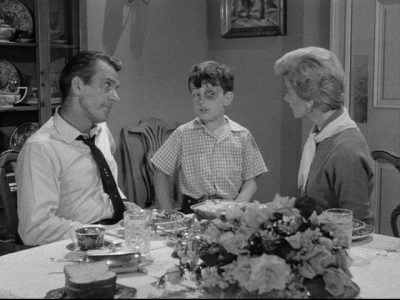
    Men cannot look to Ward Cleaver as an example of what it takes to be a good dad because there would be no Ward without June who now has a satisfying and meaningful out-of-the-home job. So men came back to an empty house. People expect men to be comforted by that. "No kids at home?" we're supposed to say. "Great! I can pop in that first person shooter I've been dying to try while I drink beer and watch porn on my 64" 3-D television."
    But it is sadder than that really. We just didn't think at all about what we expected men to be like in a society where women had been liberated because there was an inherently sexist tone at the base of the 1960's and 70's women's movement. Only a very few academics stopped to ask what men were missing out on. Men never asked themselves, "what are we missing when we leave girlie things to the women?" And the reason, of course, is that girlie things are inherently valueless except in so far as they can attain some socially recognized success. And by socially recognized, we mean recognized by men. So you see, in the end, there is no such thing as reverse sexism, it's just the same sexism, differently perceived. Kind of like the same M&M, but a different color shell.
  • Girl Power: We have certainly recognized that Girls (big G) have power. Isn't that what the Spice Girls were all about? Lipstick, makeup, and toenail polish are all now being reclaimed as powerful objects of ornamentation that can promote a woman's career just like a good power tie can make or break a president. Right?
    If they were really acknowledged as powerful, then wouldn't the people in power be wearing them? Why isn't the president, or even the Secretary of State borrowing from this supposed "Girl Power?" How many women ceo's are wearing power FM Pumps while they walk into a boardroom?
    The answer to all these questions lies in the name of the movement itself. It is "Girl Power," not "Woman Power." We make it infantile because our image of a powerful woman is not an older woman at the helm of a fleet of merchant ships. She is supposed to be a child taking her power in a way that men can recognize (sexually), rather than a threat to the established hierarchy. Unforunately, "Girl Power" is not in contradiction to "Boy Power" as it at first sounds, but actually opposes "Woman Power."
    Another, more insidious version of "Girl Power" is the new long line of "Power Princesses." On top of targeting VERY young girls with an image that benefits the bottom line for traditional mega corporations, it exemplifies a vision of the powerful female as young and it shows their "power" as trivial and meaningless without men.
    I am baffled by the fact that nobody has thought to make it a movement about queens instead of princesses, and I am not talking about the elbow candy queens of the last century of French autocratic rule. I am talking about Queen Elizabeth I, perhaps the most powerful and successful monarch in European history. She managed to take England from an inconsequential island nation looking up at the dutch with eyes the size of saucers, to being the famed empire on which the sun never set. But if English monarchs aren't your taste, we've got Cleopatra (the real one, not the sexy one from the pornographic imagination of the "Greatest Generation"), Hatshepsut (yes, that Pharaoh does have breasts), and Isabella I (the discovery of the American trade route? Just something she thought up during her knitting circle).
    But of course, we know why we'd prefer to focus on Princesses. Because women with actual power scare us, even if they are VERY young. Worse than that, the reaction from the folks over at Disney to the criticisms of traditional princesses, has been to make the princes who were rescuing them powerless themselves. Make the man look powerless even while you make the woman actually powerless. The impact of this on children, boys in particular, but also girls who will eventually realize that the new Princess of Whales is just elbow candy to anti-democratic figureheads, is going to be interesting to watch as the current generation of kiddo's comes of age.
  • The New Gender Code: All of this has accompanied a feeling among Americans that putting children into their particular gender roles is completely okay. It is practically impossible nowadays to buy boys clothing with any pink on it at all. Even Teddy Roosevelt, the great Rough Rider himself and defender of early 20th Century masculinity, photographed his infant sons in dresses (that infant in Teddy's eldest daughters lap, is his son Quentin). This desperate scramble to make sure that every child, no matter how young, is easily identifiable as boy or girl is a brand new movement. Considering that we are supposed to be in an era when gender doesn't matter, this seems at first like a flat out contradiction. However, it is the belief that gender is an inconsequential game which we all play, that enables this hyper-genderization of our young children. After all, children are supposed to play, and one of the things that children need to play at is gender. That is how they learn what it means to be a boy, girl, man, woman, and other (see the section on non-traditional genders above).
    But children are not playing at gender. Their parents are using their children as genderization test subjects. Infants don't buy their own camo fatigues and princess dresses. We do it for them, and when we do, we are sharing with them our priorities. We are explaining to them better than if we gave them a lecture on the immovability of gender traits that women are elbow candy, and men are warlike and aloof.
    There are others still who feel free to hyper-gender children because they don't think that gender is influenced by environment. This theory is based on books like "As Nature Made Him." Not even taking into account the horrible scientific methodology on which these books rely, none of us actually believe that gender is immovable, otherwise, like Teddy Roosevelt, we wouldn't point at parents who dress their infant boys in dresses and say, "You're messing that kid up." It wouldn't matter how we dressed our infant boys because they would grow up to be manly men (or less manly men) regardless of what we taught them to be. All girls would like pink and all boys would hate being kissed, regardless of how recently pink was actually a color associated with masculinity and how often full grown men in other cultures kiss each other as a sign of comradery.
So here's my prediction. I predict that the generation we are now raising will rebel. We are at a stage right now that is more gendered than at any time since the 1950's and in some ways advertising has made us more gendered than at any time in America's history. But the genie is out of the bottle. As the young people in the preschools, and elementary schools today grow into adulthood and go to college, too many of them will read Gloria Steinem, Catherine MacKinnon, and Susan Faludi to keep this whole gender liberation thing a secret. That knowledge will spread and we will have a gender rebellion on our hands that is as significant as the hippies and bra burners (note; very few bras were actually burnt).

That is the extent of my rather whimpy prediction. This generation will rebel against its parents (now that's controversial), and it will be so incredibly creative and exciting that none of us are able to say for sure exactly how it will be done. Most of us will be terrified of it (because if we are not, it won't be rebellion), and all of us will think to ourselves in our grumpy ways, "kids today." Even those of us who want a rebellion against today's hyper-genderization will utter complaints like, "These kids don't know what a rebellion looks like. I remember back in the day..." The cycle will continue. The only thing you have to ask yourself is, will you be on the right side of history?

Wednesday, April 20, 2011

Parents: This is Your Wake Up Call

In the latest issue of Parents Magazine, there was a long article about how to bridge the growing achievement gap between boys and girls.  If you haven't been keeping up with the research, this time boys are being left behind at alarming rates.

Even a cursory view of the actual research shows us that boys and girls brain structures are virtually identical.  How can this be?  After all 58% of college graduates are now girls, and girls are outscoring boys on all standardize tests, except in math and science where the they are neck and neck.  It seems to be the conclusion of much of popular culture that our educational system is letting boys fall behind by expecting them to sit down and learn.  Parents Magazine seemed to assume that the wetware, the actual brain, is different in a boy than in a girl.  But of course, if that were true, then no amount of tricks or strategies would be able to undo boys inherent inability to compete now that girls had been liberated.

How short does our memory have to be to have forgotten that boys used to outperform girls?

Boys weren't allowed to go around playing games all day because they were just naturally active.  To the contrary.  Through the course of human history, boys have been doing better than girls by simply going to school and sitting through hours upon hours of drab and dry Latin classes, and lectures on algebra.  In 1950's America, teachers weren't allowing boys to get involved in their learning by being more active.  In fact, boys were expected to sit quietly and listen to their teachers without having any breaks until recess.  So how could it be that in today's school environment, where children are more engaged in physical movement while learning, and play to teach, and everything else, suddenly boys brains have become incapable of focusing for the relatively small portion of the class period that they are expected to sit still.

The right blames feminism for all this.  They see a conspiracy; an attack on boys.  But if there is an attack on boys, it is from the right.  By rewarding boyishness in boys, we are doing terrible damage.   Americans have told boys that what it means to be a boy is to play wildly and with abandon.  Boys play sports and watch TV.

According to the actual science, boys and girls learning abilities and styles are nearly identical until puberty.  Whenever a child focuses on one activity for an extended period of time, they are developing executive function and attention span.  Executive function is the single biggest factor in academic success, not any magical brain chemistry that is gender specific.  And executive function can be learned, just as throwing a baseball or counting to 100.  Going to a ballet, playing house, playing tea party, and decorating your dolly's play area are all ways to exercise executive function.  Playing sports, playing video games, and watching cartoons are not.  In the traditional gender roles, girls have a lot of executive function practice, while boys have a lot less.

In a way, forcing kids to sit through those long boring classes in the 1950's actually was good pedagogy.  We now know that they didn't learn what they were supposed to be learning, but they were learning something far more important.  They were learning the ability to sit through a boring lecture, a board meeting, a long exam, or a grueling all nighter before a deadline.  They were learning executive function.
Childrens clothes today are more gendered than ever.  Girls shirts are more pink, and if they are not pink, they always have frills and poofy sleeves (trust me, I've looked).  Boys shirts are mostly about sports, military, or (for some reason) dinosaurs.  Parents today seem desperate to make sure their children are identified with their proper gender, and if parents are desperate to make that identification, than their children will sense that desperation and do what they can to make their parents happy.


It is time to break the cycle before another generation of boys is lost to gender expectations. 

Boys already commit violent crimes in far higher rates, and they already die young because of risky behavior at rates so high that even befriending a boy in early pubescence increases a girls rate of dying from risky behavior also.  I am anxious to see what this hypergendered generation of boys is going to do.  Hopefully, they will follow in the footsteps of so many generations before them and they will rebel.  But this time, they will rebel from the WASPy gender roles that are being foisted upon them by their parents who are so terrified of themselves that they have spent the last decade hiding behind makeup and football helmets instead of trying to liberate themselves.

I write this with my 14-month-old son on my chest.  My son is wearing a red and orange striped shirt, a pair of brown sweat pants, and a small pony tail sticking off the top of his head.  He is asleep right now, but he will wake up!

Sunday, April 3, 2011

Mothering: My Day in Drag

The difference between mothering and fathering tell a significant story.  A couple of weeks ago, I dressed in a suit in order to make a contact about a possible job, and I experienced that difference first hand.

People looked differently at me when I was in my man drag.  They avoided my gaze.  Normally, when people see my 13-month-old, they smile, laugh or stick out their tongues at him.  But that day, they were far less likely to look at him at all, much less play with him.  On the rare occasion that someone did look him in the eye, they conspicuously looked away when I turned towards them.  I was an entirely different person than the tee-shirt and jeans wearing mop headed, Dad.  I was a Father.


Mothering
According to Sara Ruddick, the author of the 1989 book Maternal Thinking, "Anyone who commits her or himself to responding to children’s demands, and makes the work of response a considerable part of her or his life, is a mother."  The most common definition of mothering emphasizes caring for someone, usually a child.  Sometimes we say it derisively to indicate that someone cares so intensely that they have lost their boundaries.

Fathering
Fathering, on the other hand, is (as Webster's dictionary puts it) begetting.  It is a place of origin, as in, "He is the father of the social welfare state" or, "He fathered that child."  A father need only make a woman pregnant and then walk away.  However, fathering has also come to mean earning money for the household, like a conveyor belt in a factory.  The role of earning money fits well with our traditional view of a father as someone who is there at the beginning but doesn't see the parenting role through to completion.  The father is there in the morning, all the parenting happens, and then the father comes home at night for a glass of beer and maybe some disciplining of the kids.

From Dad to Father
While I was on that subway wearing a suit, to the people around me I was a father.  I was an originator, not an actively engaged participant in my son's life.  I was not a dad who responds to the needs of someone I love, but just a father probably taking him to daycare.  It was a sad experience for me.  There was a presumed distance between me and my son.  It felt like I wasn't getting credit for my "mothering."

But there was also a moment of realization of how far we have come.  Whenever I am dressed as Dad, people do see me as a mother.  They acknowledge Ms. Ruddick's statement that mothering is not female specific.  They look me in the eye and talk to me about my child.  When I go to playgroups and reading circles with my 13-month-old, I see other Dads who are met as equals by the mother's in the group.  I am heartened to see that the traditionally female skill of child rearing, not just child begetting, is becoming a human skill shared by men and women alike.  This barrier is falling as quickly as the workplace gender barrier was to fall in 1961.  We men are taking what should rightfully be shared with all of us.

Parenting?
As described in earlier posts, the stay-at-home mom is a recent invention made available to more than a handful of extremely wealthy women only through the invention of technology.  Before the early 20th cetnruty, most but the wealthiest women had to work even as they were raising their children, and the wealthiest women had servants that raised their children for them so it would be a teeny bit ridiculous to even call them stay-at-home moms. 

The real question is not whether we should all do what Judith Schafley tells us to do and have the women stay home with the kids while the men go to the office, but that we should all be able to find a combination of "mothering" and "fathering" that suits our individual talents, skills, and desires.  Perhaps for most people, we all want to mother and to father.  We all want to find a meaningful job where we can challenge ourselves and engage with other adults, and we all want to cuddle with our kids once we get home. 

Certainly, daycare can make that available to a larger swath of people, just as having one auncle stay home with all the cousins can free up the family to go to work.  But part time work is another option, where parents can trade off between one another.  In that world, perhaps a man in man-drag on a subway car with a stroller will be assumed to be as much a mother as a woman in sweat pants.

Recently, Sara Ruddick passed away, and we all lost a great mother who spent her life caring for us and trying to introduce us to the satisfaction of being great mothers ourselves.  And perhaps, for those women who want to be fathers, they can find equal satisfaction in being great fathers.  When it comes to parenting, Sara Ruddick showed the world that gender roles are artificially confining unless we can pick which parts of which gender role we'd like and which we wouldn't.

We won't be able to pick and choose our gender roles until we start valuing the woman's role as much as we value the man's role.  As long as the emphasis on gender equality remains on the importance of giving women a place in the office, we will always be valuing traditionally male priorities.  And it is not enough to smile and say, "Isn't that wonderful that he's a stay-at-home Dad," or "It sure is nice to have a man in the classroom."  We need to actively advocate for men in pink collar jobs and the home, and while it is good to have women allies, the impetus needs to come from men.

One example of this kind of liberating gender traitorship is the active and full engagement of a man in man-drag in mothering.  I felt deliberately defiant and a terrific rush of liberation when I sang songs with my kid the whole way home.  For some, the melody of liberation is "We shall overcome," for others it is actually, "Twinkle twinkle little star."